Pushing the Web Forward: Integrating WebGL and 3D into Modern Interfaces
Sujal Makkar
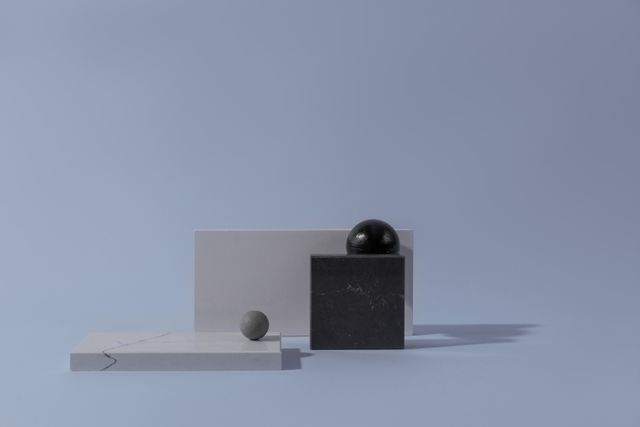
Beyond the Flat Screen: The New Dimension of Web Design
For over two decades, web design has been constrained to the two-dimensional plane. We mastered responsive grids, fluid typography, and complex flexbox layouts, but the fundamental experience remained inherently flat. Today, the integration of WebGL and 3D modeling directly into the browser is fundamentally changing how users interact with digital products.
We are moving past simple parallax scrolling or heavy, pre-rendered video backgrounds into an era of truly immersive, high-tech web environments. By leveraging custom shaders, dynamic lighting, and fluid page transitions, modern agencies can create digital experiences that feel tangible, atmospheric, and entirely unforgettable.
The Power of React Three Fiber
Building 3D web experiences used to require deep, specialized knowledge of low-level graphics APIs and complex vanilla JavaScript architectures. The emergence of React Three Fiber (R3F)—a React renderer for Three.js—has bridged the gap between traditional web development and complex 3D rendering.
R3F allows developers to build 3D scenes declaratively, using the exact same component-driven architecture they use for standard UI elements. This paradigm shift offers massive advantages:
Rapid Prototyping and Reusability: Teams can iterate on 3D scenes quickly without breaking their React workflow. A 3D model can be wrapped in a reusable component and dropped anywhere in the DOM.
Seamless DOM Integration: 3D canvases can interact directly with standard HTML elements. You can have HTML text float over, track, or mask 3D objects, creating a unified hybrid interface.
State Management: Because it lives inside the React ecosystem, your 3D scenes can react natively to global state changes—such as a user changing a product's color in an e-commerce configurator.
High-Impact Use Cases for the Modern Brand
Integrating WebGL isn't about adding gimmicks or slowing down the browser for the sake of visual flair; it is about enhancing the narrative and providing utility. We are seeing incredible applications across various industries:
1. Advanced Product Configurators
For luxury goods, automotive, and consumer electronics, static images are no longer sufficient. WebGL allows users to rotate, customize, and inspect products in real-time. By applying high-fidelity physically based rendering (PBR) materials, brands can simulate the exact reflectiveness of polished steel or the weave of carbon fiber directly in the browser.
2. Immersive Scrolly-Telling
Narrative-driven campaigns are utilizing 3D camera movements tied to scroll events (often managed by libraries like GSAP ScrollTrigger combined with R3F) to guide users through a storyline. As the user scrolls, the camera flies through a 3D landscape, seamlessly pausing to display HTML data points before continuing the journey.
3. Abstract Brand Visualizations
Tech companies and B2B platforms often struggle to visualize intangible services like cloud computing or cybersecurity. Custom GLSL shaders can generate dynamic, abstract particle systems or fluid simulations that react to user mouse movements, conveying a sense of high-tech sophistication and real-time processing.
The Performance and Accessibility Mandate
The most critical challenge in WebGL development is performance optimization. A beautiful 3D site that drops frames or crashes on mobile devices is a failed project.
Agencies must employ strict optimization techniques:
Draco Compression: Compressing GLTF models drastically reduces initial payload sizes.
Texture Atlasing: Combining multiple textures into a single file to reduce draw calls.
Level of Detail (LOD): Swapping complex models for simpler ones when they are far away from the camera.
Progressive Enhancement: Detecting the user's device capabilities and disabling complex post-processing effects (like bloom or depth of field) on low-end hardware.
As we look toward the future, the imminent widespread adoption of WebGPU promises even greater performance, shifting more computational load to the GPU and unlocking previously impossible visual fidelity on the web. Mastering the art of 3D web design requires a deep understanding of lighting, camera physics, and strict user performance thresholds. When executed perfectly, it elevates a brand's digital presence from standard to visionary.
